Identity preserved
Participating Churches may retain their own name, liturgical rite, internal governance, pastoral customs, and ecclesial identity according to the agreed model of communion.

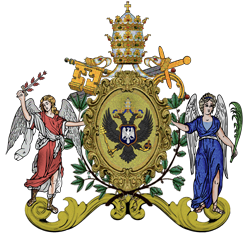
Corporate communion
A pastoral invitation to Churches and jurisdictions seeking mutual recognition, ecclesial communion, and unity of Christian witness—without surrendering their legitimate rite, identity, or internal life.
In special consultative status with the United Nations Economic and Social Council since 2019
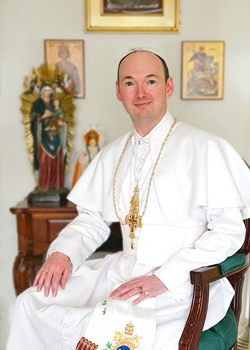
An apostolic call to communion
To Churches of Apostolic Succession within the Orthodox, Catholic, and Anglican traditions: the Holy Apostolic See extends an invitation to consider fraternal communion in faith, sacrament, order, and shared witness.
Many Churches remain firm in doctrine, discipline, and sacramental life while standing outside a formal patriarchal communion. We recognise that legitimate autonomy and ecclesial identity matter. They should not be sacrificed to bureaucratic conformity.
Accordingly, we invite serious jurisdictions to explore a relationship founded upon Apostolic truth, canonical responsibility, mutual respect, and Christian charity.
In Christ,
Radislav Pp. I
Pope and Prince-Bishop of Rome-Ruthenia
“Let all things be done decently and in order.”
1 Corinthians 14:40
The invitation in brief
A serious ecclesial relationship can strengthen common witness while preserving the legitimate inheritance of each Church.
Participating Churches may retain their own name, liturgical rite, internal governance, pastoral customs, and ecclesial identity according to the agreed model of communion.
Communion rests upon shared faith, valid Apostolic Succession, sacramental integrity, and responsible canonical discipline—not upon association in name alone.
Churches may stand together through prayer, formation, intercession, counsel, and appropriate collaborative ministry in service to Christ and His Church.
Communion without absorption
This is not an appeal for submission. It is an invitation to preserve the fullness of truth together and to become a beacon of reconciliation in a divided world.
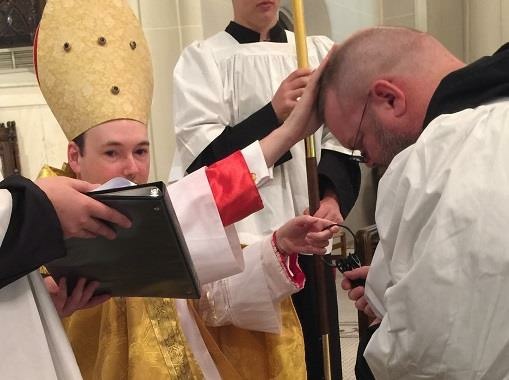
Foundations for dialogue
Every proposed relationship is discerned by the Holy Apostolic See. Communion is never automatic and cannot rest on goodwill alone.
Documentation, ecclesiastical history, sacramental practice, governance, and lineage are reviewed to determine alignment with Apostolic doctrine and canonical discipline.
Ecclesial models
The appropriate form depends upon the jurisdiction's present order, leadership, maturity, and pastoral needs.
The Church retains its name, rite, and internal structure while entering mutual recognition of sacraments, clergy, and Apostolic life under the terms formally established.
A jurisdiction without a patriarch or primate may petition to enter the Catholicate under the spiritual fatherhood of the Roman-Ruthenian Pope while retaining appropriate freedom in daily governance.
A developing or reorganising jurisdiction may enter a defined period of relationship, orientation, and discernment before any fuller ecclesial arrangement is considered.
Clarity of purpose
The fruits of communion
When rightly ordered, communion gives Churches a larger field of relationship without erasing the inheritance that makes each one itself.
Mutual strengthening through a visible relationship grounded in historic faith, succession, and sacrament.
Access to relationships that support clergy formation, ecclesiastical discipline, and responsible governance.
Relationship with a global, historically rooted Church whose wider institutional work includes United Nations consultative engagement.
A united voice for Apostolic Christianity amid the spiritual and cultural challenges of the modern world.
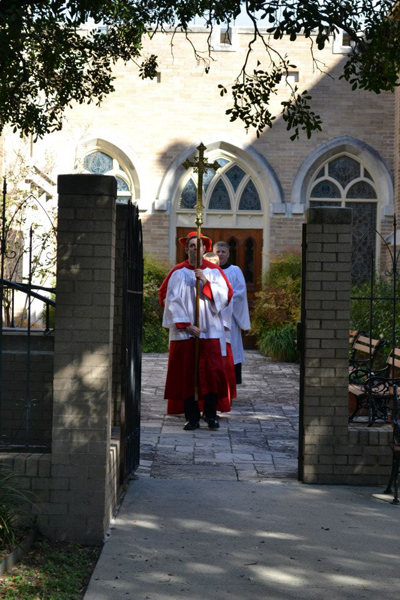
Canonical responsibility
A formal ecclesial relationship is more than friendship, publicity, or the exchange of courtesies. Its form, authority, and obligations must be clearly established.
Canonical notice: Churches and organisations incardinated within the canonical structure of the United Roman-Ruthenian Church become subject, from the moment of admission, to the Canon Law of the United Roman-Ruthenian Church and to the terms of their approved relationship.
Churches already led by a patriarch or metropolitan may retain independent authority under an approved communion model. The precise relationship is determined through ecclesiastical dialogue and formal judgment by the competent authority.
A prayer for unity
May the Holy Apostles Peter, Andrew, Stephen, and Mark intercede for all who seek unity in the fullness of truth and charity. May their Apostolic legacy guide us into communion, not by compromise, but by fidelity.