Our identity
An ancient inheritance in the modern era
The United Roman-Ruthenian Church is an autocephalous Orthodox Old Catholic Church of Orthodox and Catholic heritage. It is not presented as a new creation, but as a contemporary expression of an ancient Apostolic inheritance—a custodial Church preserving the faith, order, sacramental life, and cultural patrimonies it has received.
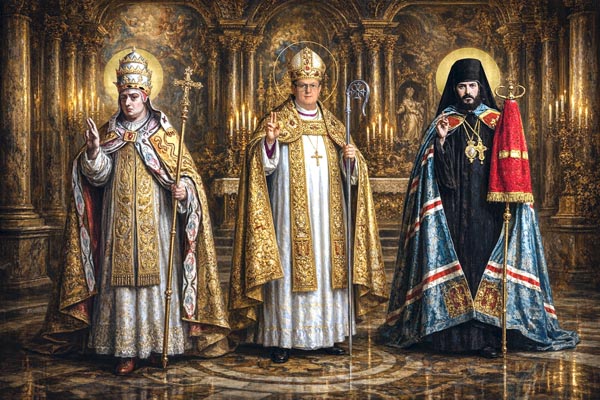
Its official timeline begins with the founding of the Church in AD 33. Its Apostolic succession comes through the ancient patriarchates of Rome, Constantinople, Antioch, and Jerusalem and their historic extensions into Rus’ and the Americas. Russian, Greek, Roman, Syrian, Coptic, Armenian, and American lines converge in a derivative patriarchate whose constituent jurisdictions united in 2023 as the modern United Roman-Ruthenian Church.
Continuity and consolidation
Historical evolution of the modern See
The modern See emerged within the continuous life of the Apostolic
Church and subsequently received the ecclesiastical successions and
historical inheritances described in the complete timeline.
- AD 33The Church’s official timeline begins with the founding of the Apostolic Church.
- 1978–2009The Diocese of the Southwest.
- 1993St. Edwin Caudill brings the Southwest Diocese into Orthodox and Catholic Succession.
- 2009–2011The Anglo-Catholic Archdiocese of the Southwest.
- From 2011Patrarichate recognized. The See of St. Stephen, Coadjutorship of Rome—founded in the first century by St. Peter—and the See of Aquileia—founded in the first century by St. Mark.
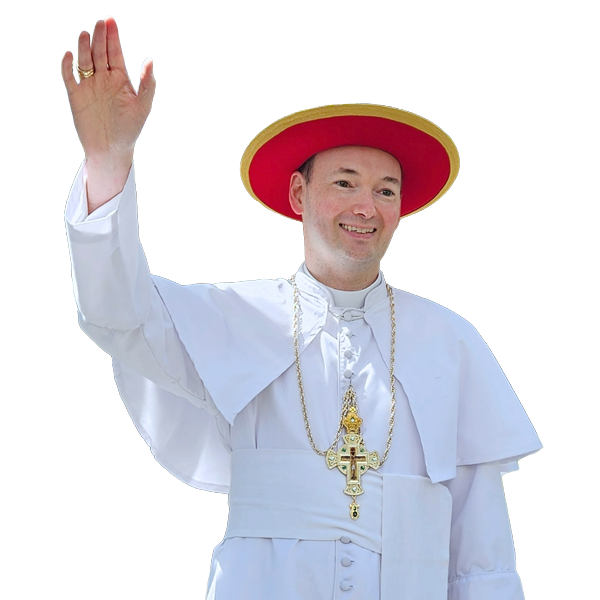
- 2014Recognition of the Roman-Ruthenian Papacy.
- 2020Papal status first made public.
- 2023The Apostolic See of Sts. Stephen and Mark; the constituent jurisdictions unite as the modern United Roman-Ruthenian Church.
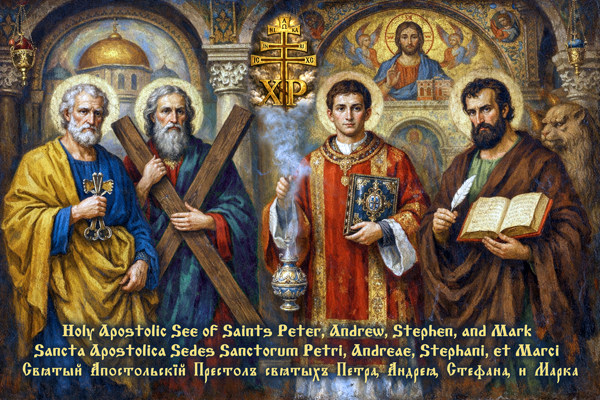
- 2025The Holy Apostolic See of Sts. Peter, Andrew, Stephen, and Mark; full manifestation of the Roman-Ruthenian papacy.
The inheritance of the Church is in hereditary descent from Rome and Russia and Apostolic succession from Saints Peter, Andrew, Thomas, Thaddeus, and Bartholomew.