
The Roman-Ruthenian Supreme Pontiff, as the Latin Orthodox successor of St. Peter the Apostle, is the perpetual and visible foundation of unity among the bishops and faithful of the Church.
The office unites the Petrine ministry of Supreme Pontiff, the patriarchal jurisdiction of Catholicos, and the historic temporal custodianship of the Prince-Bishop of Rome-Ruthenia.
The papal title and office were formally conferred in 2014 upon the Prince-Bishop of Rome-Ruthenia, together with full papal authority within his own jurisdiction. The Roman-Ruthenian Pope exercises that office as Supreme Pontiff of the autocephalous United Roman-Ruthenian Church, the Eastern Roman Church with Latin heritage.
Succession and accession. The Roman-Ruthenian papacy forms part of a semi-hereditary, semi-elective ecclesiastical and dynastic order. When a lawful hereditary successor exists, the Patriarchal Electors confirm the succession. When no such successor exists, they canonically elect a new successor, who succeeds to the same ecclesiastical dynasty and receives its historic arms, patrimony, and office. Following confirmation or election and the applicable acts of conferral, the successor exercises the papal office as Supreme Pontiff of the United Roman-Ruthenian Church.
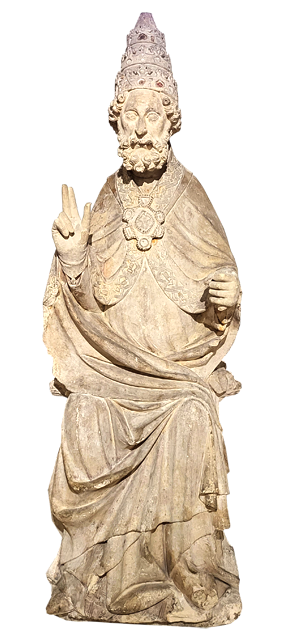
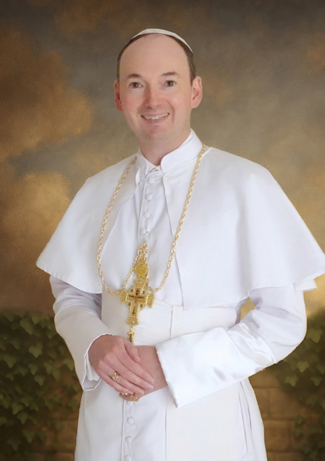
Pope Radislav I of Rome-Ruthenia
His Apostolic Highness the Most Holy Pope Radislav I of Rome-Ruthenia is Prince-Bishop and Catholicos of Rome-Ruthenia and Supreme Pontiff of the United Roman-Ruthenian Church.
Pope Radislav was elected Anglican Patriarch of the Anglican Patriarchate of Rome in 2011. In 2014, the papal title and office were formally conferred upon him as Prince-Bishop of Rome-Ruthenia, together with full papal authority within his jurisdiction. The Anglican Patriarchate subsequently became one of the constituent jurisdictions united in the present United Roman-Ruthenian Church in 2023. Upon the completion and full public manifestation of the succession in 2025, the transitional designation Coadjutor of Rome was discontinued and the designation Supreme Pontiff entered formal use.
In his office, Pope Radislav is the 265th successor to St. Peter the Apostle in Apostolic Orthodox Latin Succession. He stands in documented Roman and Eastern lines of Apostolic succession transmitted through sacramental episcopal consecration and serves the Church through its spiritual and patriarchal jurisdiction.
The most solemn style of the Roman-Ruthenian Pope is His Most Holy Apostolic Highness. The customary ecclesiastical style is His Holiness.
Names and identity: Radislav Romanovich Johnson is the legally registered dynastic name of Pope Radislav I of Rome-Ruthenia. The pontifical and public name Pope Radislav I of Rome-Ruthenia is formally documented in his United States passport under the United States Department of State’s “known as” endorsement. Further biographical information is available in his official biography.
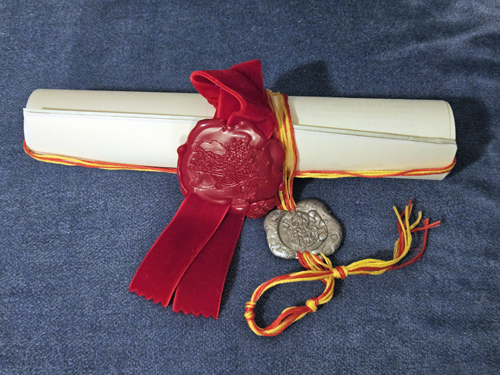
Apostolic Continuity Preserved in the Archives
Among the preserved archival holdings of the Pontifical Chancery are ecclesiastical instruments connected to the early juridical and patriarchal development of the United Roman-Ruthenian Church and issued by authorities of the Holy See of Rome.
These pertain to the reception of apostolic jurisdiction, patriarchal autocephaly, and papal dignity within the continuing Orthodox and Catholic tradition now embodied in the Roman-Ruthenian Church and State. These documents are part of the sacred patrimony of the Church, preserved with care and continuity.