
Summary
The title/style Apostolic Highness is deemed the most proper and suitable for the Roman-Ruthenian Pope, as it effectively merges his spiritual and temporal authority in a single and unique designation. “Apostolic” signifies his role as the head of the autocephalous United Roman-Ruthenian Church, rooted in unbroken Orthodox and Old Catholic Apostolic Succession. “Highness” reflects his temporal authority related to the Pontifical Imperial State, the historic patrimony of the Church that, while neither possessing nor seeking control of political territory, remains an ecclesiastical nation without borders. Spiritually, it is equivalent to the style of Holiness. Thus the title encapsulates his dual role as both a spiritual leader and an ecclesiastical sovereign, thereby consolidating various aspects of his office into a coherent expression that honors the Church’s traditions and heritage.
The most formal style of the Prince-Bishop is His Apostolic Highness the Most Holy. That may be shortened to His Apostolic Highness, but never merely to Highness. The shortened form is, rather, His Holiness.
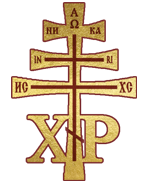
The title Apostolic Highness is the most proper and fitting for the Prince-Bishop of Rome-Ruthenia, Supreme Pontiff of the United Roman-Ruthenian Church because it succinctly and elegantly reflects the combination of the spiritual and temporal aspects of the semi-hereditary, semi-elective office. This title encapsulates the historical, apostolic, and imperial dimensions of the Prince-Bishop’s authority in a single, cohesive designation that uniquely refers to the Chief of the Roman-Ruthenian Church and State.
1. Pontifical and Apostolic Authority
The term “Apostolic” emphasizes the Prince-Bishop’s spiritual authority as the head of the Holy Apostolic See of Sts. Peter, Andrew, Stephen, and Mark and therefore as head of the United Roman-Ruthenian Church, an autocephalous Orthodox and Old Catholic Church. This title aligns with the historic use of “Apostolic” in Christian tradition in reference to a Church or See that continues the mission and authority of the Apostles in unbroken succession (Ostrogorsky, 1969).
2. Royal and Imperial Dignity
The term Highness reflects the titular temporal authority tied to the office of the Roman-Ruthenian Pope, though the Pontifical Imperial State remains a nation without borders that neither possesses nor seeks territorial borders. In the case of the Pontifical Imperial State and United Roman-Ruthenian Church, the Prince-Bishop holds both spiritual and temporal roles (Coulombe, 2020):
- The Pope is Supreme Pontiff of an autocephalous Church.
- The Pope is also the temporal successor of St. Peter and therefore also the ecclesiastical claimant to the Roman Empire and Kingdom of Ruthenia, among others.
This use of Highness thus signifies the Pope’s temporal role as Chief of both the United Roman-Ruthenian Church and the Pontifical Imperial State of Rome-Ruthenia.
3. Combination of Spiritual and Temporal Titles
The title of Apostolic Highness is unique and uniquely refers to the Roman-Ruthenian Pope. It merges both the pontifical (Apostolic) and temporal (Highness) aspects into one (Heritage, 2023).
Over time, various titles have been formerly or currently applied to and recognized for the office of the roman-Ruthenian Pope, including:
- His Holiness: (in current use) A title traditionally reserved for the head of a church, particularly in the case of popes and patriarchs. This reflects his role as Papa-Catholicos of Rome-Ruthenia and Supreme Pontiff of an autocephalous church. This is retained in the current style, with “the Most Holy” (Sanctissimus in Latin) being used either with Apostolic Highness or by itself (Deffenbaugh, 2023).
- His Imperial and Royal Highness: (former use/obsolete) This reflects the historic imperial and royal patrimony of the Pontifical Imperial State, though the Church today neither controls nor seeks to control any political territory and remains a nation without borders (Apostolic, 2024; Gavaldá and Miranda, 2015).
- His Holy Eminence: (former use/obsolete) A variation of Holiness and other titles.
However, Apostolic Highness succinctly and uniquely combines these various aspects into a single title that reflects the Prince-Bishop’s dual role as a leader with historic temporal patrimony, the culture of which is kept alive in the modern Roman-Ruthenian Church and State. Thus this title/style simplifies and clarifies the multiple roles of his office into one coherent and comprehensive designation (Deffenbaugh, 2024).
4. Synthesis of Titles
In the designation of Apostolic Highness as the principal preferred title, the following aspects are encapsulated:
- Spiritual Authority: As the head of an autocephalous Orthodox and Old Catholic Church, the Pope’s apostolic authority is emphasised, in unbroken succession from the early Christian Church.
- Temporal Authority: The Roman-Ruthenian Pope’s role as head of the Pontifical Imperial State is likewise captured in the title/style, reflecting sovereign dignity.
- Unity of Office: Overall the title/style consolidates multiple aspects of the Pope’s roles as Chief and principal representative of the Roman-Ruthenian Church and State and its people, faith, culture, heritage, and traditions into a succinct, dignified, and unique expression (Bougard and Sot, 2020).
Conclusion
The title Apostolic Highness is thus the most appropriate for the Roman-Ruthenian Pope as it reflects his comprehensive authority, combining Apostolic and Pontifical authority, spiritual leadership, and temporal authority in a single, coherent designation. This title honors both the religious and secular traditions that define the office and affirms the Prince-Bishop’s dual role as both a leader of faith and a sovereign of an ecclesiastical nation without borders.
The most formal style of the Pope is His Apostolic Highness the Most Holy. That may be shortened to His Apostolic Highness, but never merely to Highness. The shortened form is, rather, His Holiness.
References
Apostolic and Temporal Succession of Rutherford I. Pontifical Georgian Press. 2024.
Bougard, F., & Sot, M. Liber, Gesta, Histoire: Ecclesiastical Memory in Medieval Europe. Cambridge University Press (2020).
Coulombe C. Europe and the Empire. Oxford University Press. 2020; 34(2).
Deffenbaugh v. Röm-Frankfurt, Ed. Almanac of Würzburg. Pontifical Georgian Press. 2016–2024.
Gavaldá y Castro, Rubén and Arnaldo I. A. Miranda Tumbarello. Fons Honorum: compendio de Derecho Nobiliario Europeo y Americano. Instituto Heraldico de Buenos Aires. 2015.
Heritage and Ecclesiastical Titles in the United Roman-Ruthenian Church. Il Nunzio Romano-Ruteno. 2023.
Ostrogorsky, G. History of the Byzantine State. Rutgers University Press. (1969).